What is a Conventional Loan?
A conventional loan is a type of mortgage that is not insured or guaranteed by a government agency, such as the Federal Housing Administration (FHA), the Department of Veterans Affairs (VA), or the United States Department of Agriculture (USDA). Instead, conventional loans are backed by private lenders and are typically sold to government-sponsored enterprises (GSEs) like Fannie Mae and Freddie Mac.
Because the government does not back these loans, they generally require a stronger credit profile and a stable financial history compared to government-backed mortgages. However, for borrowers who qualify, conventional loans offer unparalleled flexibility, higher loan limits, and the potential to avoid costly mortgage insurance premiums.
Conforming vs. Non-Conforming Conventional Loans
Conventional loans are broadly categorized into two types based on their loan amounts and underwriting guidelines:
• Conforming Loans: These loans adhere strictly to the funding criteria and loan limits set by the Federal Housing Finance Agency (FHFA), Fannie Mae, and Freddie Mac. In most areas, including Northampton County and Cape Charles, VA, the baseline conforming loan limit is adjusted annually to reflect changes in average home prices.
• Non-Conforming (Jumbo) Loans: If you are purchasing a luxury waterfront property in Cape Charles that exceeds the FHFA conforming loan limits, you will need a non-conforming or “jumbo” loan. These loans carry their own specific requirements, which often include higher down payments and stricter credit standards.
The Benefits of Choosing a Conventional Mortgage
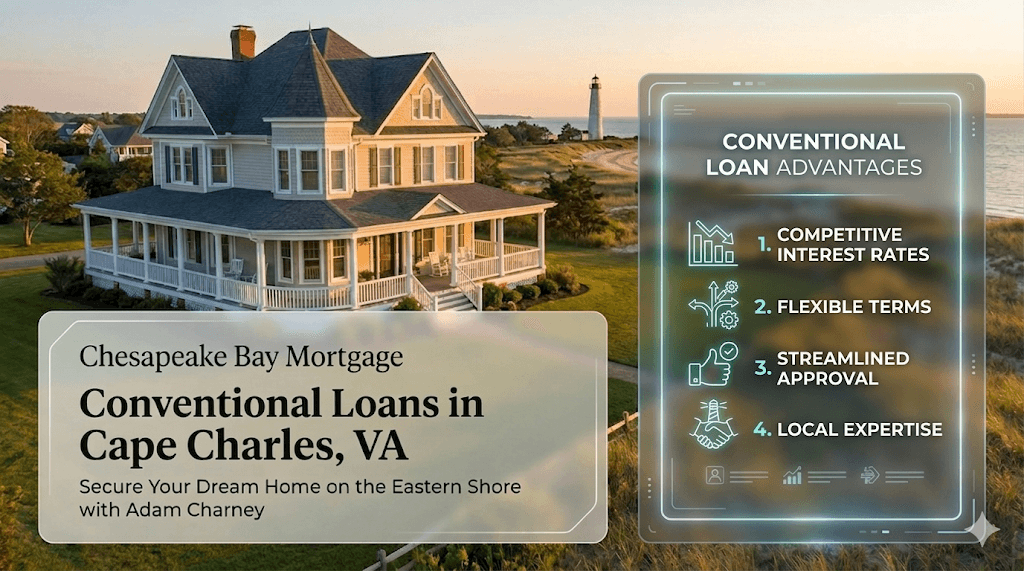
Conventional mortgages are the most popular type of home loan in the United States, and for good reason. They offer a wide array of benefits tailored to borrowers with good to excellent credit. When you work with Chesapeake Bay Mortgage, we help you leverage these benefits to achieve your homeownership goals.
1. Flexible Down Payment Options
A common misconception is that you must put down 20% to qualify for a conventional loan. While a 20% down payment eliminates the need for Private Mortgage Insurance (PMI), many conventional loan programs allow for down payments as low as 3% for first-time homebuyers, or 5% for repeat buyers. This makes conventional financing highly accessible for those who prefer to keep their cash reserves intact.
2. Cancellable Private Mortgage Insurance (PMI)
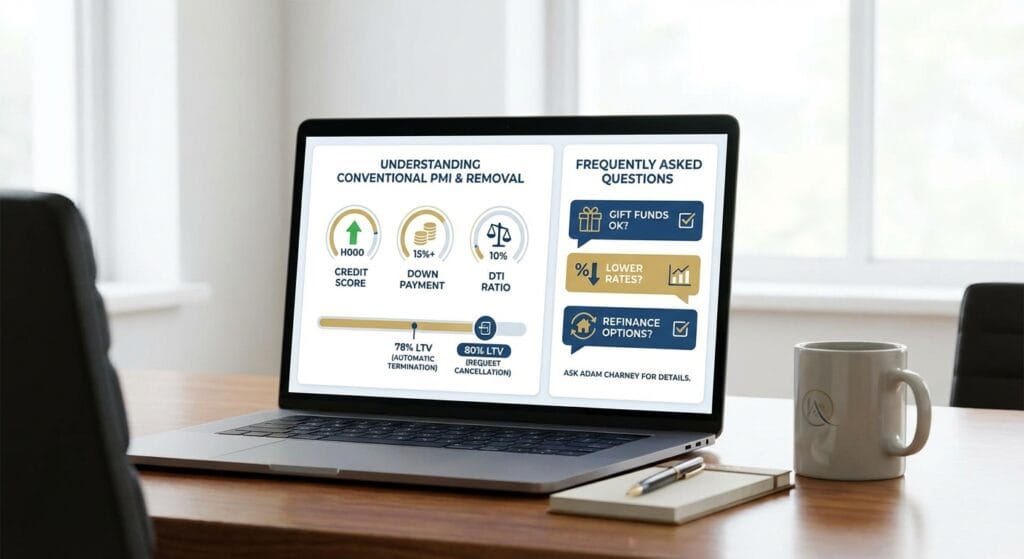
If you put down less than 20%, you will be required to pay PMI. However, unlike FHA loans—where mortgage insurance is often required for the life of the loan—conventional loan PMI is not permanent. Once you reach 20% equity in your home (either through paying down your principal or through home value appreciation), you can request to have the PMI removed, significantly lowering your monthly payment.
3. Financing for Various Property Types
While government-backed loans are strictly limited to primary residences, conventional loans offer incredible versatility. You can use a conventional mortgage to finance:
- Primary Residences: Your main home in Cape Charles or the surrounding areas.
- Second Homes / Vacation Homes: Perfect for buyers looking to purchase a weekend retreat near the Chesapeake Bay.
- Investment Properties: Ideal for investors looking to capitalize on the robust short-term or long-term rental market on the Eastern Shore.
4. Diverse Term Lengths and Rate Structures
Conventional loans give you the power to choose how you want to structure your debt. You can select a traditional 30-year fixed-rate mortgage for the lowest possible monthly payment, or opt for a 15-year or 20-year term to pay off your home faster and save on interest. Additionally, you can choose between fixed-rate mortgages (where your interest rate never changes) and adjustable-rate mortgages (ARMs), which may offer a lower introductory rate for the first few years of the loan.
Conventional Loan Requirements: Do You Qualify?
Because conventional lenders assume more risk without government backing, the qualification standards are generally stricter. Adam Charney and the team at Chesapeake Bay Mortgage will review your financial profile to ensure you meet the following standard requirements:
Credit Score
The minimum credit score required for a conventional loan is typically 620. However, borrowers with credit scores of 740 or higher generally receive the most competitive interest rates and the lowest PMI premiums. If your credit score is below 620, an FHA loan might be a more suitable alternative while you work on building your credit.
Debt-to-Income (DTI) Ratio
Your DTI ratio represents the percentage of your gross monthly income that goes toward paying your monthly debts (including your new mortgage payment, car loans, student loans, and minimum credit card payments). For a conventional loan, lenders prefer a maximum DTI of 43%, though exceptions up to 50% can sometimes be made for borrowers with high credit scores or significant cash reserves.
Down Payment and Cash Reserves
As mentioned, you can secure a conventional loan with as little as 3% down if you are a first-time homebuyer. For a second home, the minimum down payment is typically 10%, and for an investment property, you will generally need to put down 15% to 20%. Depending on your property type and credit profile, you may also need to show proof of cash reserves (enough savings to cover a few months of mortgage payments) after closing.
Employment and Income Verification
Lenders require proof of stable, consistent income. You will typically need to provide two years of W-2s, recent pay stubs, and two years of tax returns if you are self-employed. Adam Charney specializes in helping a wide range of professionals—from salaried employees to local business owners in Cape Charles—document their income properly to satisfy underwriting guidelines.